Art Director · Buffalo Buffalo
Fresh Tracks
Art directing an indie rhythm-skiing game from funding prototype to a Best Indie Game nomination and a VR release.
- Role
- Art Director
- Studio
- Buffalo Buffalo
- Years
- 2024–2026
- Platforms
- PC, PS5, PSVR · Quest 3, SteamVR (2026)
- Tools
- Unity
- Team
- Team of 12
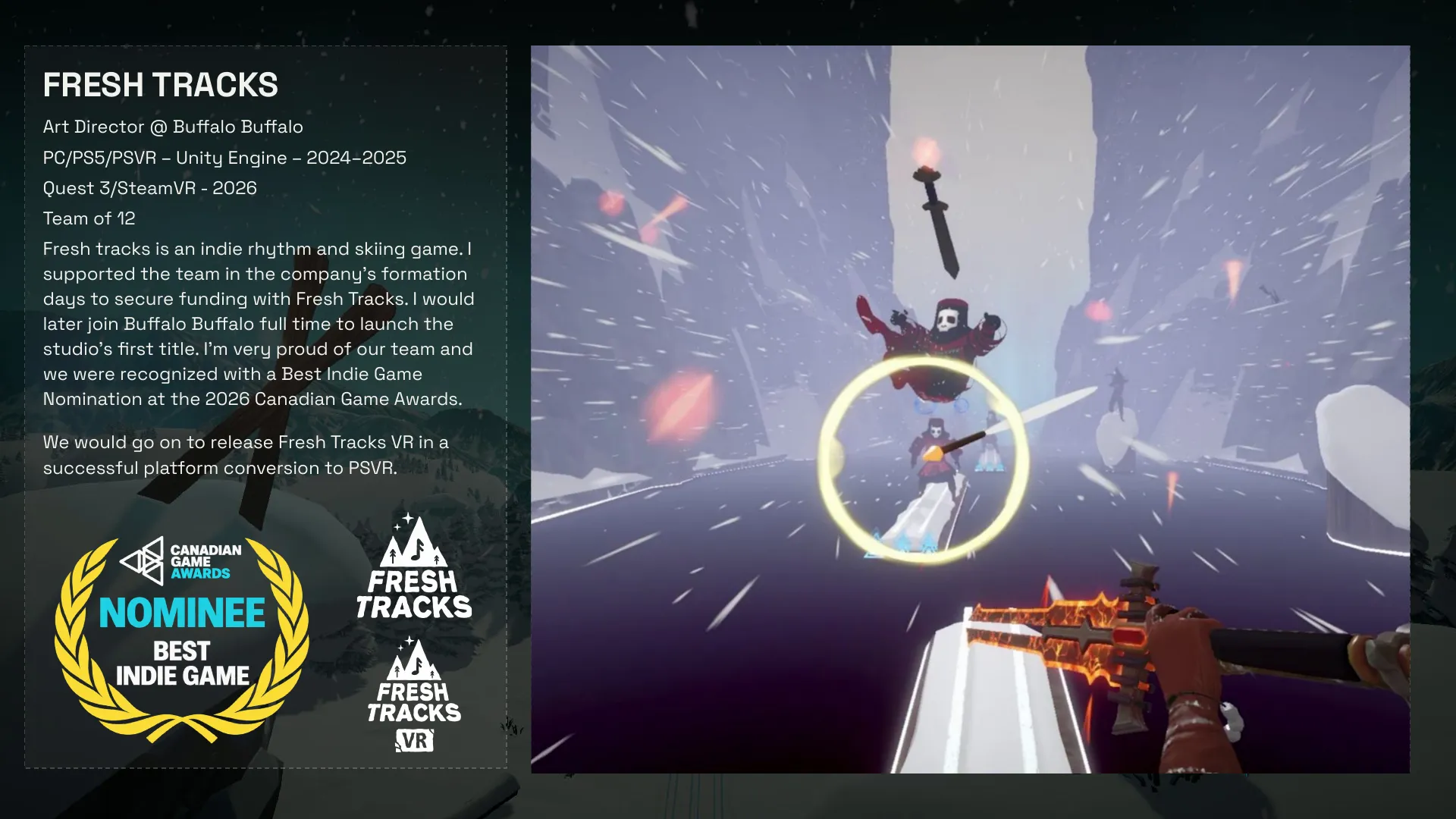
Fresh Tracks is an indie rhythm and skiing game. I supported the team in the company’s formation days to help secure funding, then joined Buffalo Buffalo full time to launch the studio’s first title. Fresh Tracks was nominated for Best Indie Game at the Canadian Game Awards 2026, and we went on to release Fresh Tracks VR.
Directing the art team
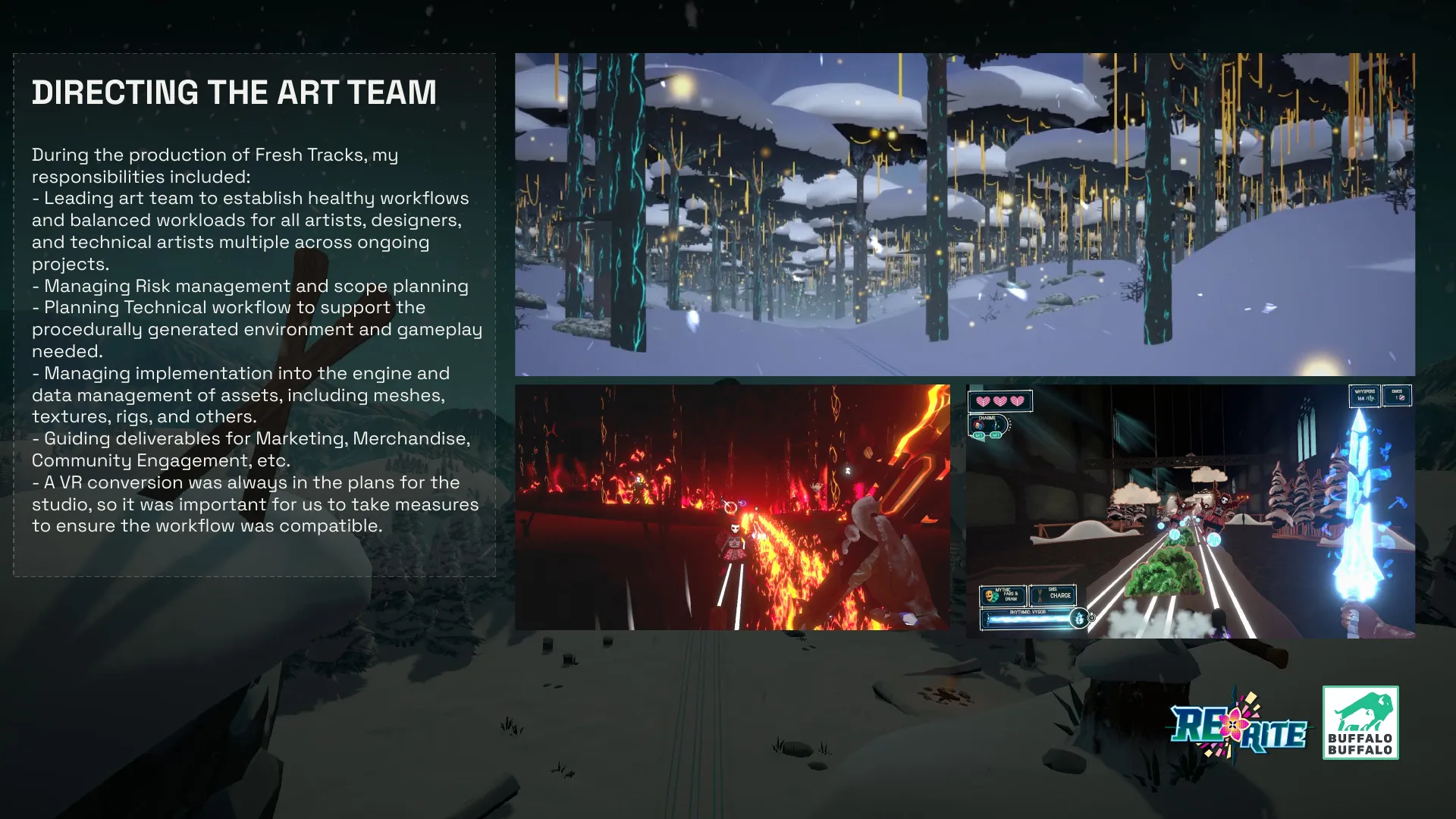
- Led the art team to establish healthy workflows and balanced workloads for artists, designers and technical artists across multiple ongoing projects.
- Managed risk and scope planning.
- Planned the technical workflow behind the procedurally generated environments and gameplay.
- Managed engine implementation and asset data management, including meshes, textures and rigs.
- Guided deliverables for marketing, merchandise and community engagement.
- Kept the workflow VR-compatible from the start, since a VR conversion was always in the studio’s plans.
Pillars of Fresh Tracks
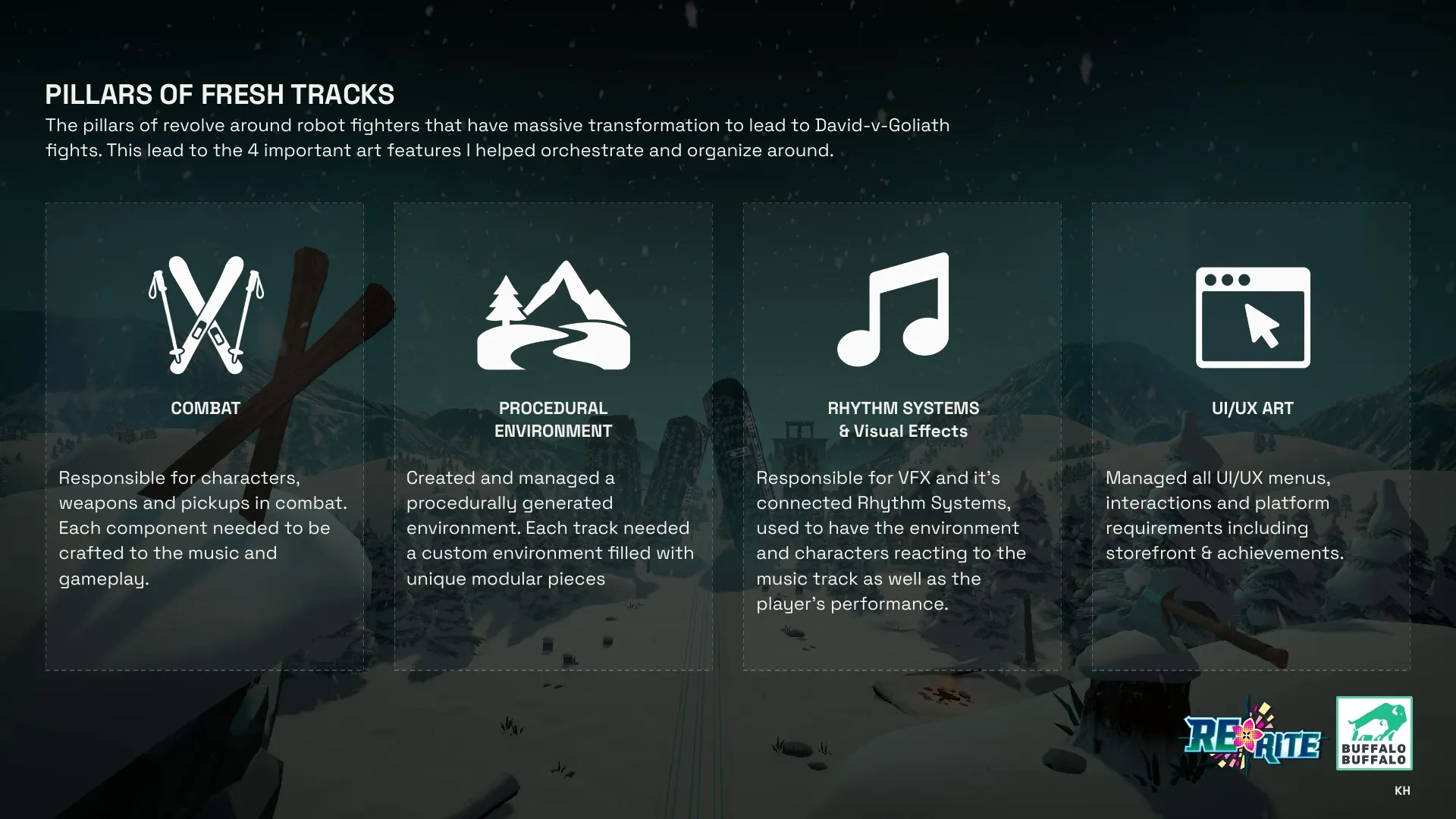
The four art areas I organized the team around.
- 01
Combat
Characters, weapons and pickups, each crafted to fit the music and the gameplay.
- 02
Procedural Environment
A procedurally generated environment system. Each track needed a custom environment filled with unique modular pieces.
- 03
Rhythm Systems & VFX
VFX and the rhythm systems behind them, so the environment and characters react to the music and the player's performance.
- 04
UI/UX Art
All menus, interactions and platform requirements, including storefront and achievements.
From prototype to release
Prototype
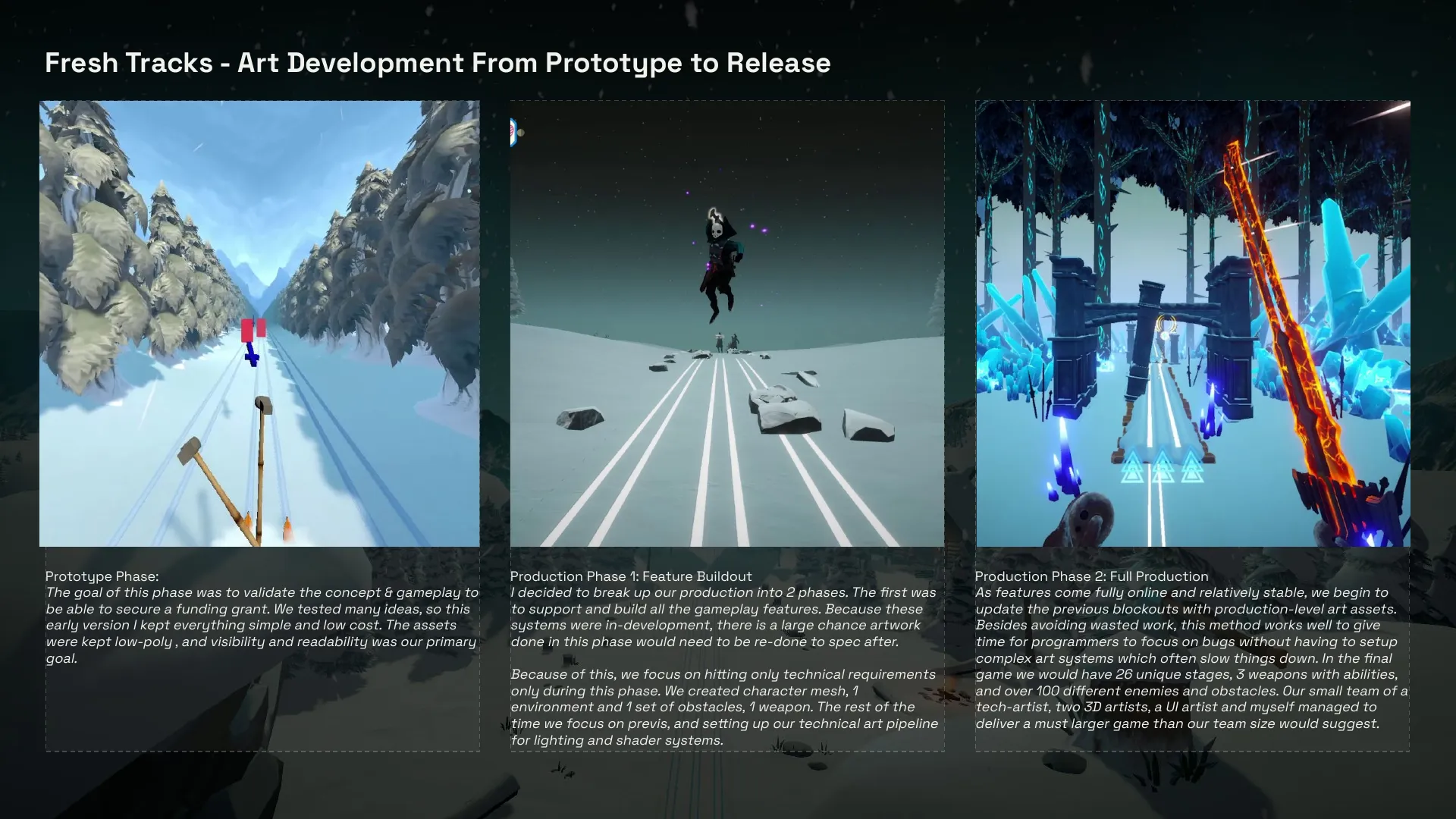
The goal was to validate the concept and gameplay well enough to secure a funding grant. We tested many ideas, so I kept this early version simple and low cost: low-poly assets, with visibility and readability as the primary goal.
Production phase 1: feature buildout
I split production into two phases. The first supported the buildout of every gameplay feature. Because those systems were still in development, art made in this phase was likely to need redoing to spec later, so we focused only on technical requirements: one character mesh, one environment, one set of obstacles and one weapon. The rest of the time went to previs and to setting up our lighting and shader pipeline.
Production phase 2: full production
As features came online and stabilized, we replaced the blockouts with production-level art. Besides avoiding wasted work, this gave programmers time to focus on bugs without having to set up complex art systems first. The final game shipped with 26 unique stages, 3 weapons with abilities, and over 100 different enemies and obstacles. Our small team of one tech artist, two 3D artists, a UI artist and myself delivered a much larger game than our size would suggest.